
—
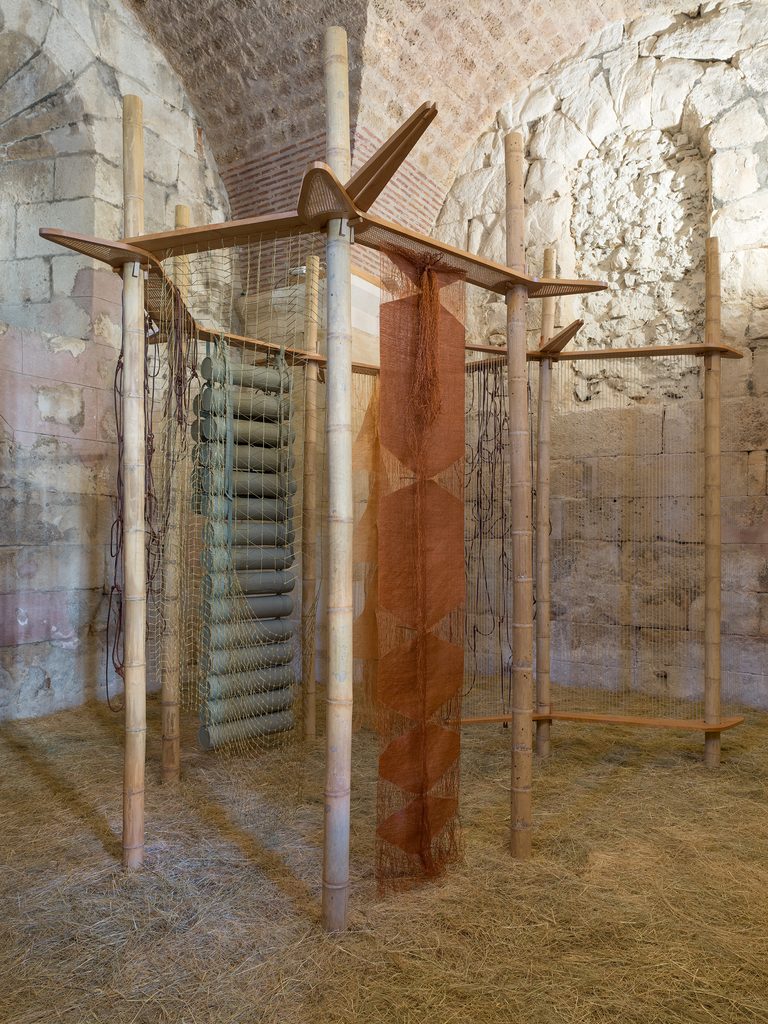
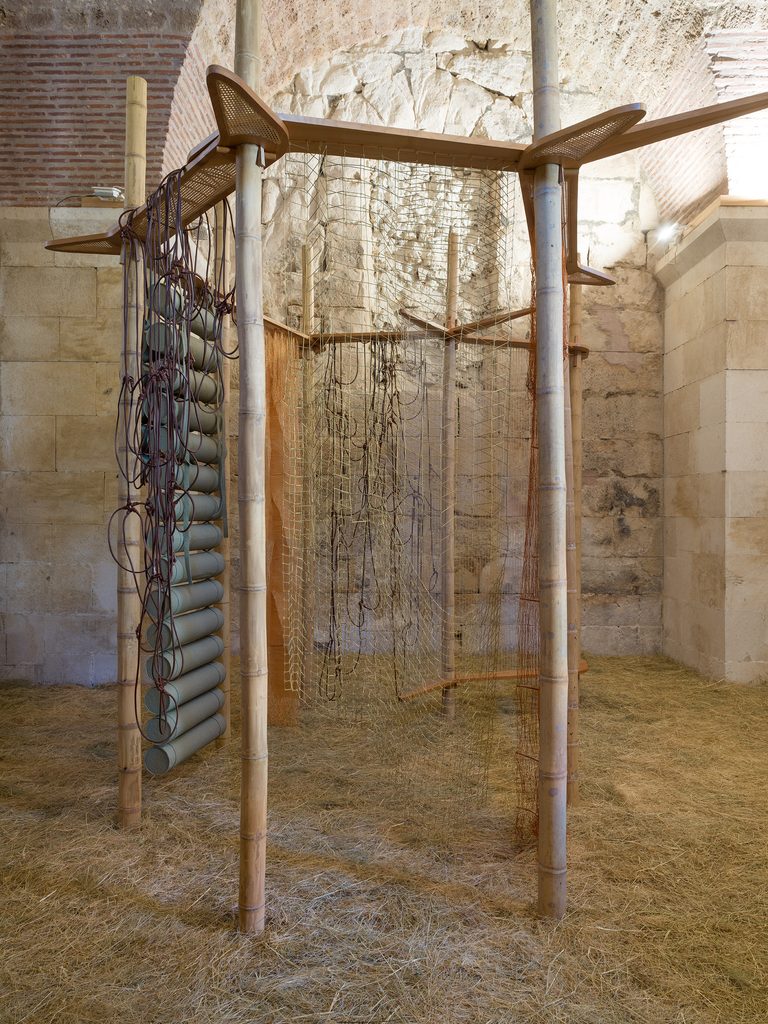
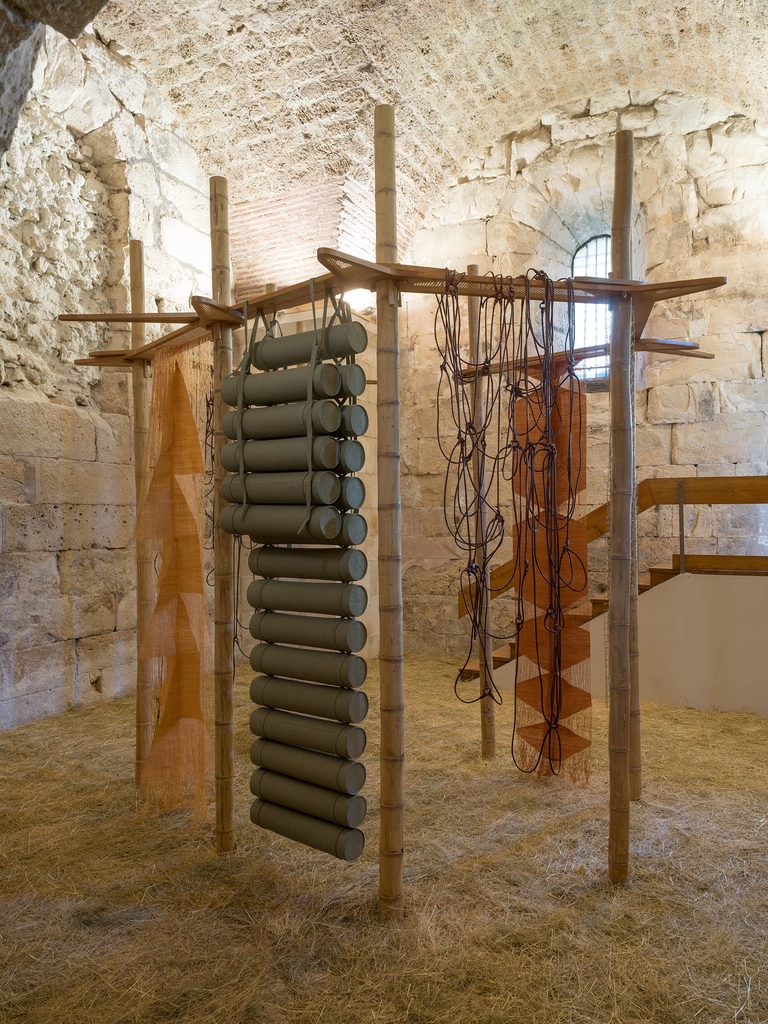
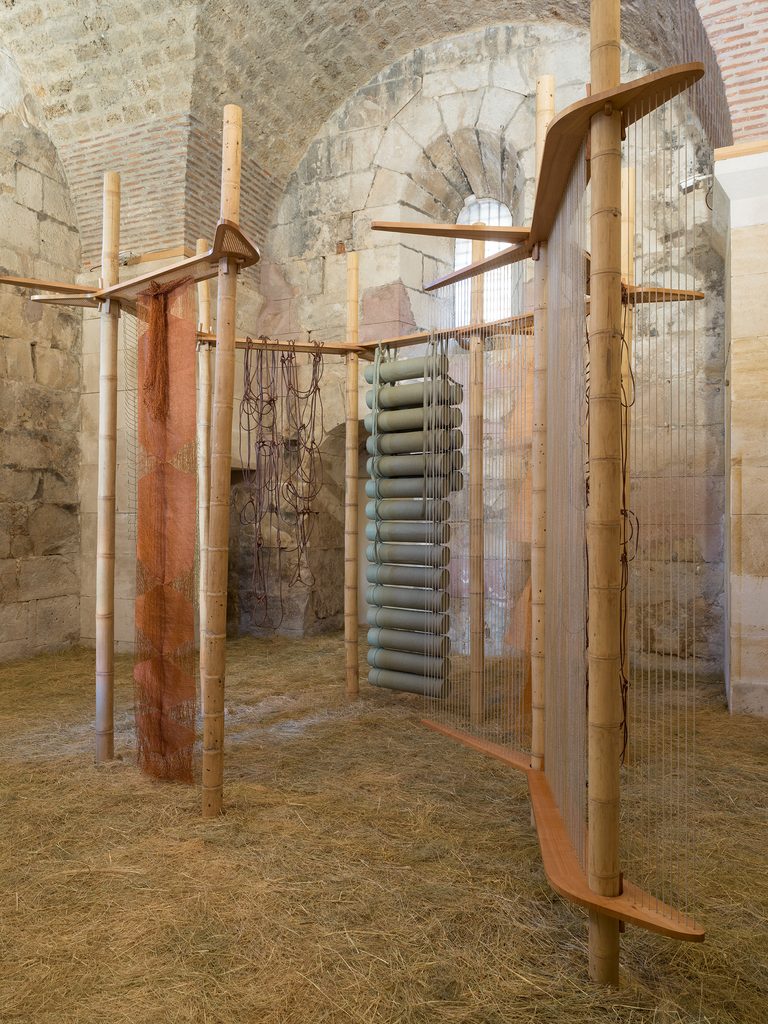
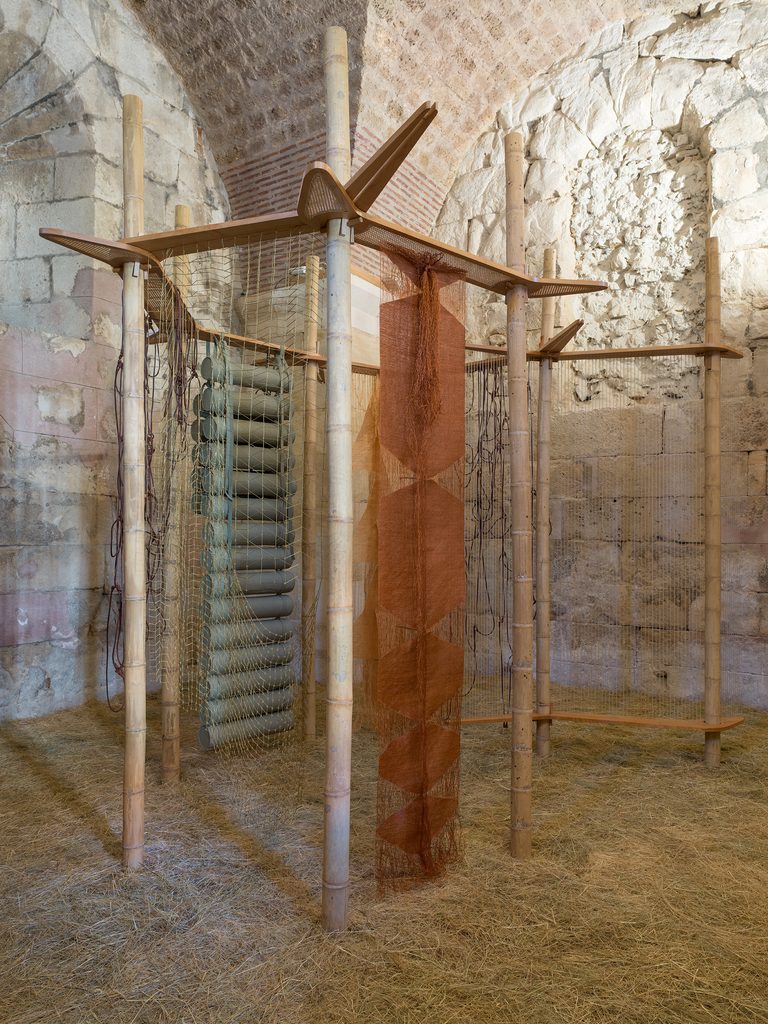
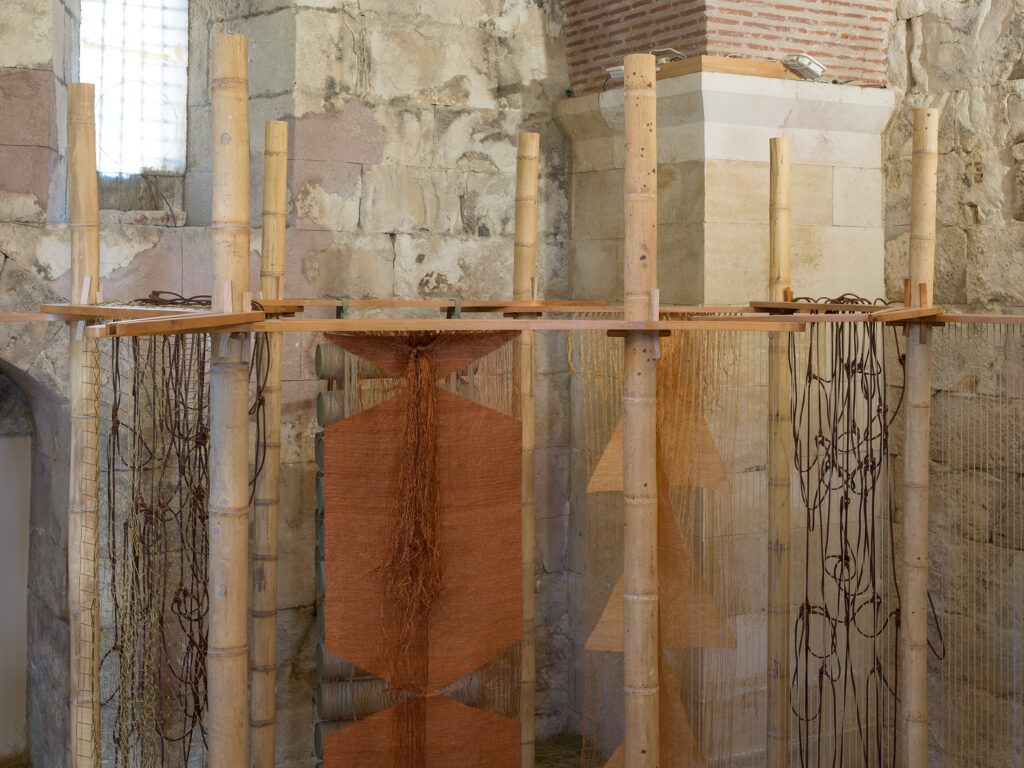
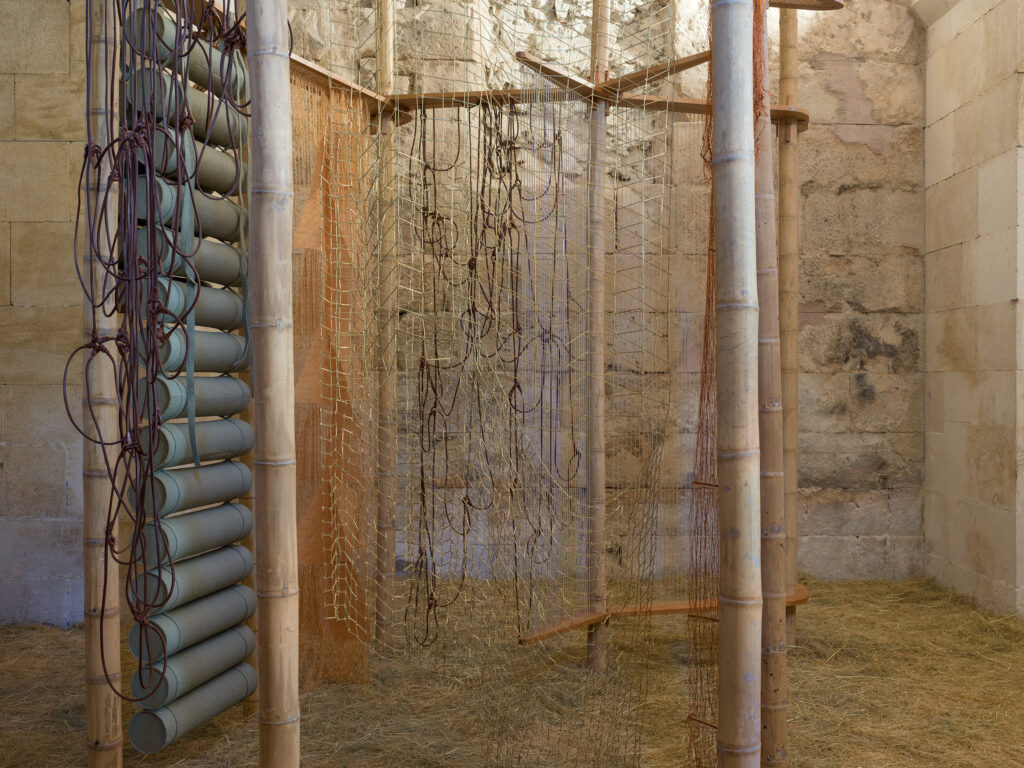
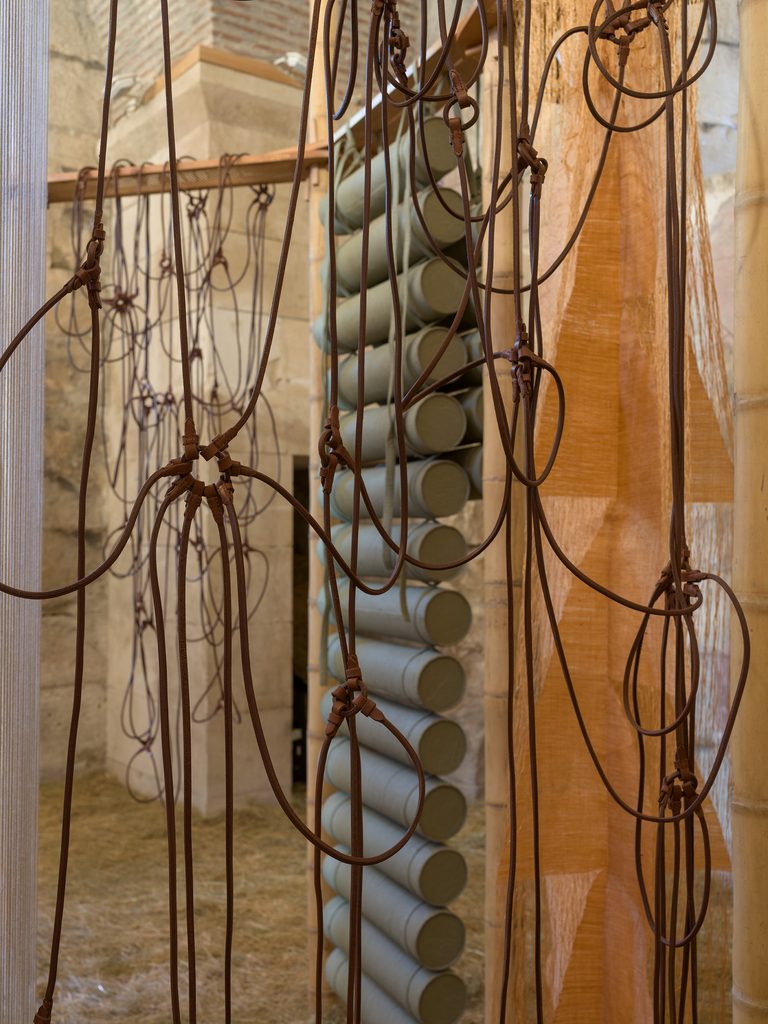
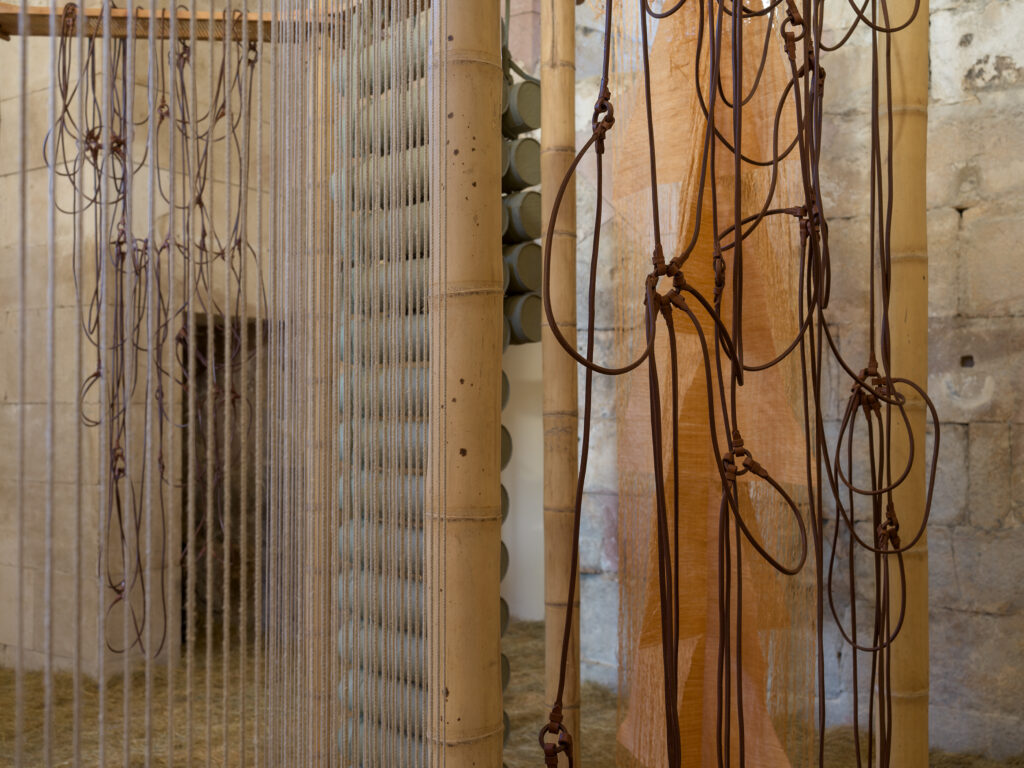
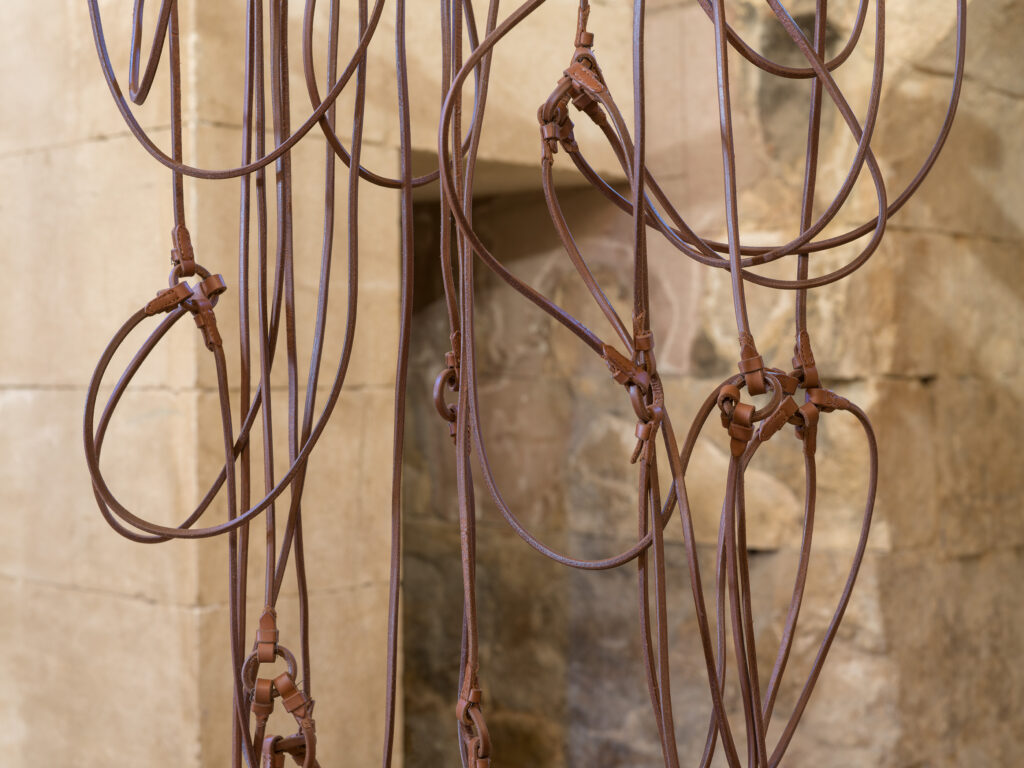
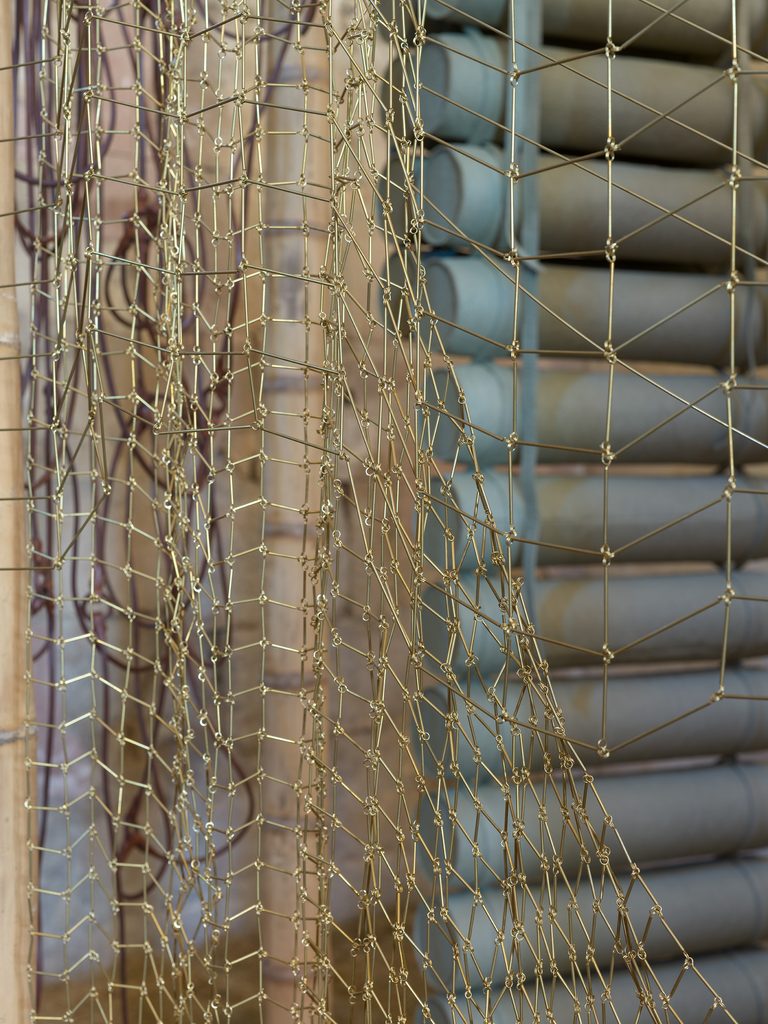
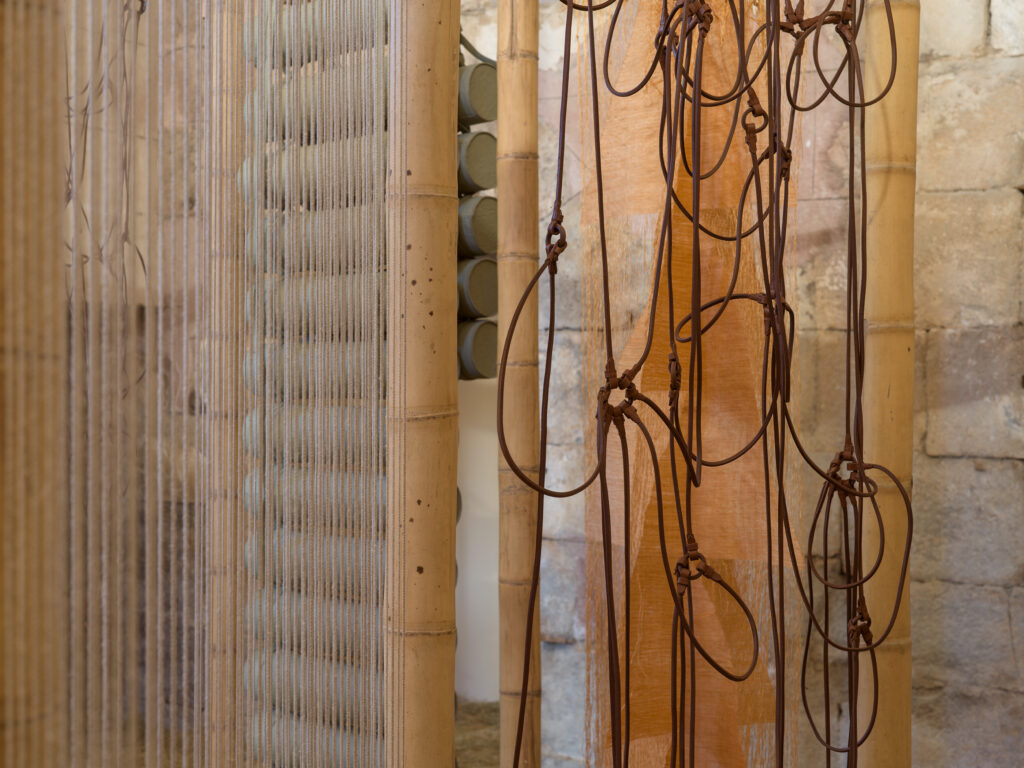
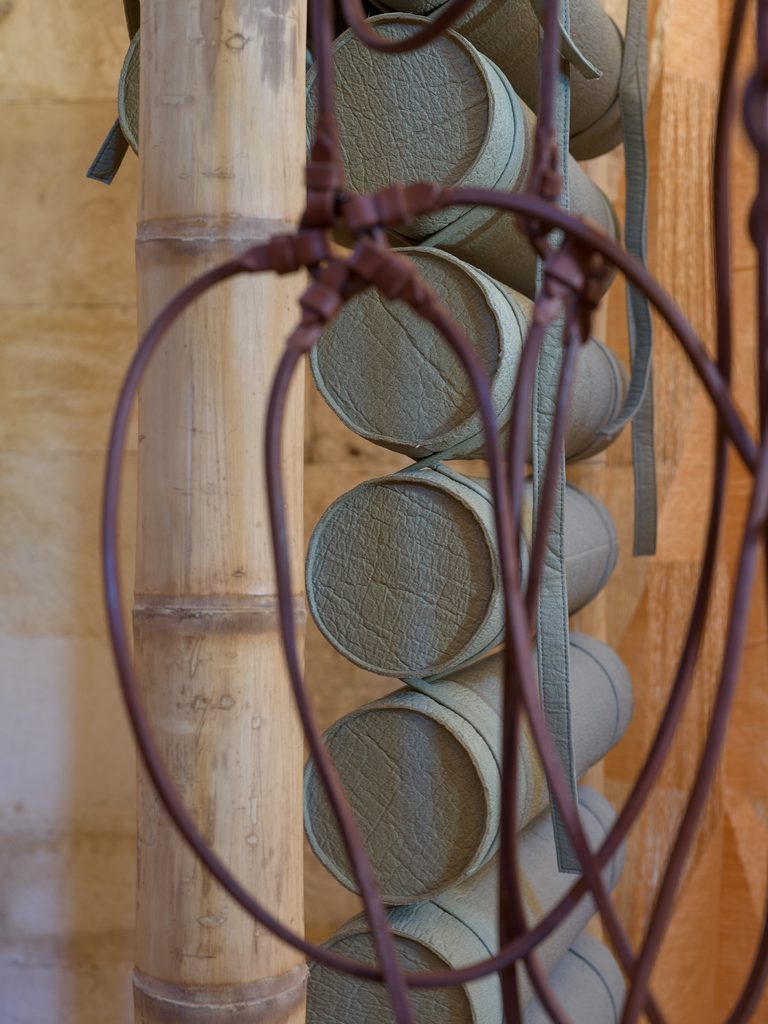
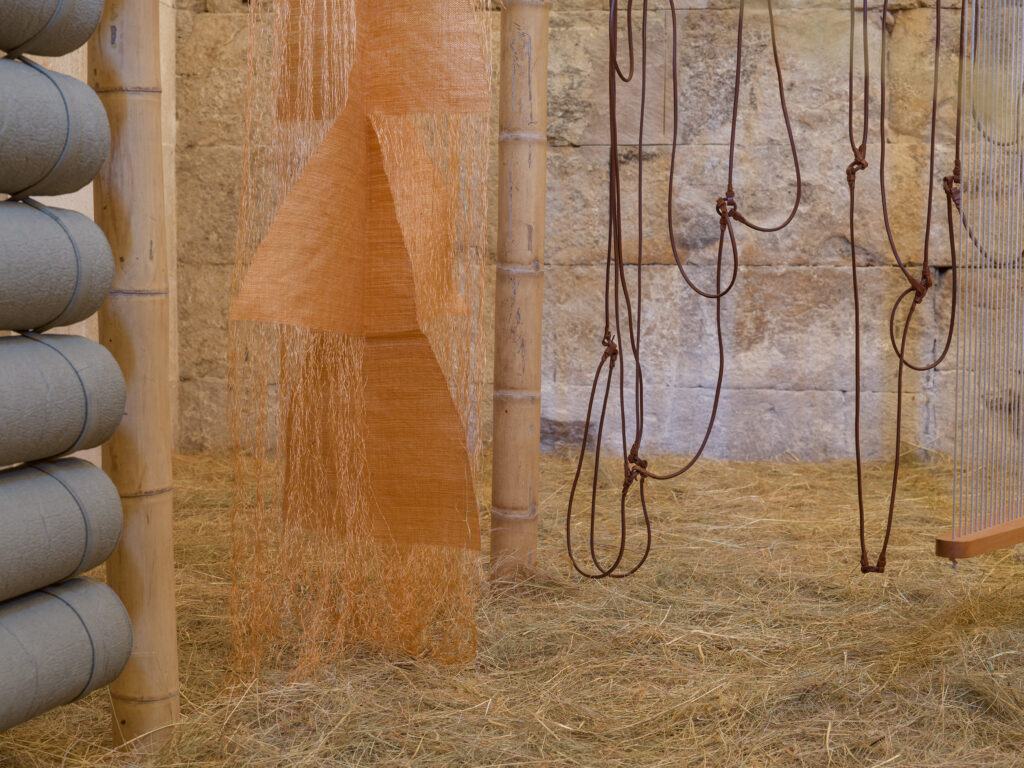
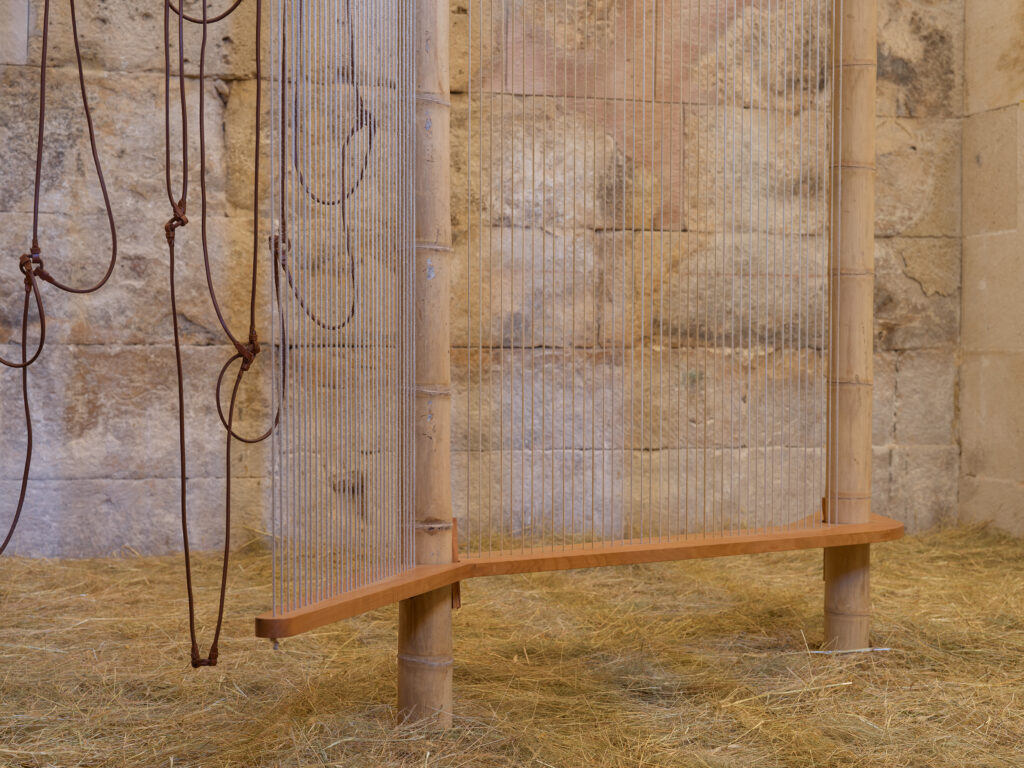
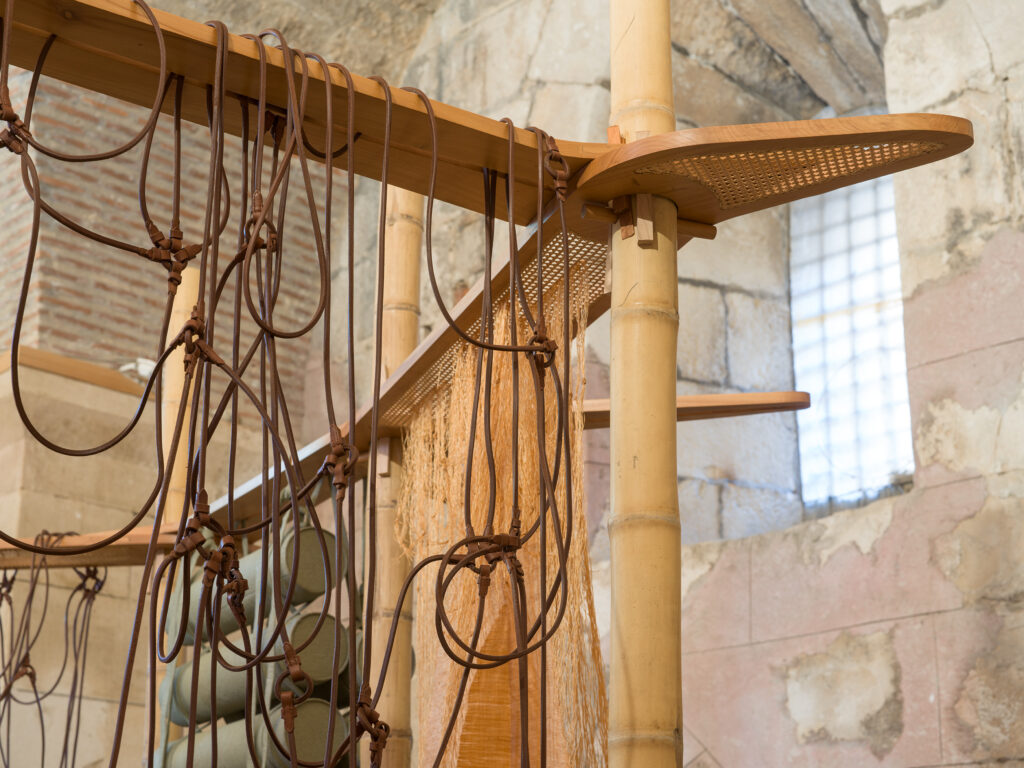
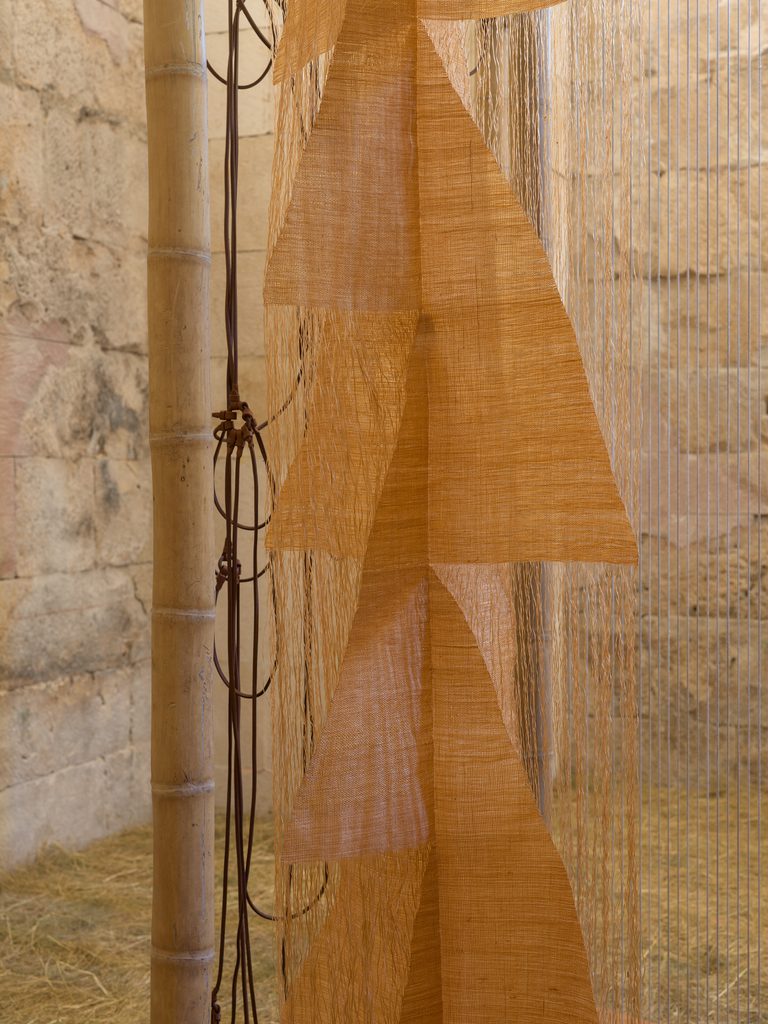
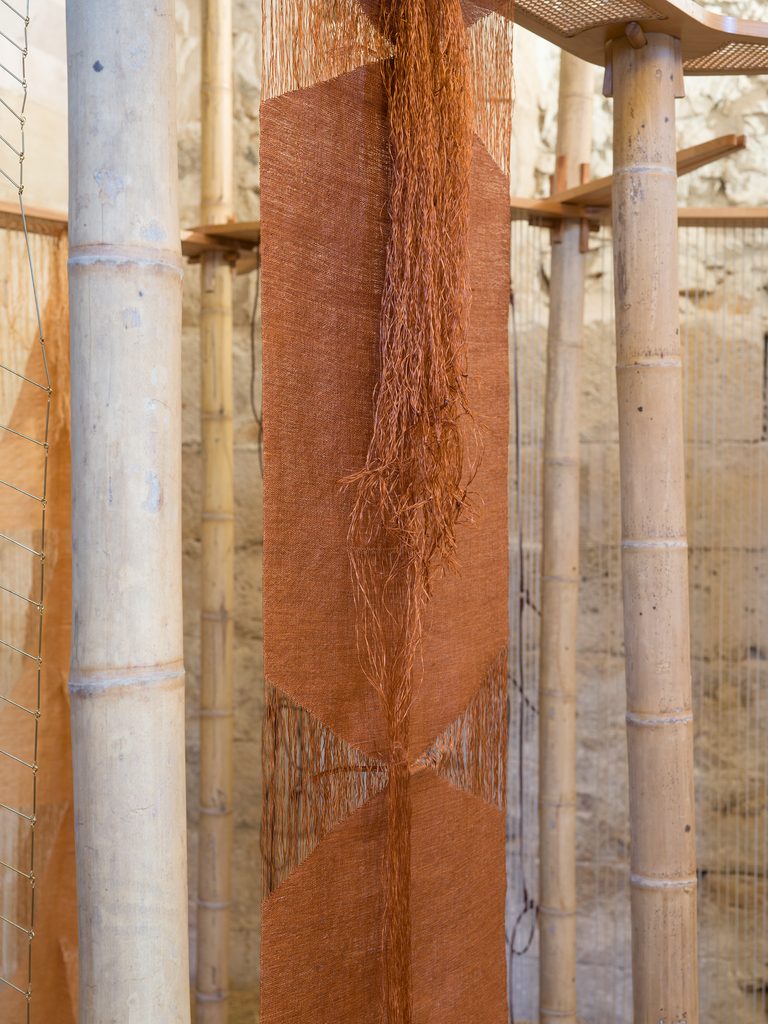
Leonor Antunes makes her first artistic appearance in Split with the installation the homemaker and her domain II, a work whose title already gestures towards a complex field of gendered relations, but certainly also to spatial and social ones. The figure of she who makes the home, who orders and tends it and symbolically carries it, calls forth a long cultural history in which the domestic function has been bound, above all, to the female subject. In the Dalmatian imagination, as in the broader ethnographic one, this image crystallises in a wise saying: that a woman holds up three corners of the house, whilst only one belongs to the man. This image holds a certain gravity, for the home appears simultaneously as a space of care, labour, repetition, and responsibility, and as a domain in which the gender-differentiated geographies of everyday life are mapped and inscribed. The work itself, however, resists any reductive reading of interiority, expanding the titular domain into a spatial, historical, and gendered matrix. Antunes inscribes into it traces of the hand, of measure, craft, migration, and female genealogies of modernism, such that the homemaker is revealed as she who produces, shapes, and sustains the home, and simultaneously as a figure who provisionally transforms public, institutional, or monumental space into a more attentive field of dwelling and care. Within the Split context, this intimate language of materials and measure extends outward towards the city itself, softening the hardness and stoutness of late-antique imperial construction and inscribing into its stone order a more intimate rhythm of being.
The methodological foundation of Leonor Antunes’s practice resides in tactile metrics, in the act of measurement. This act establishes a relation between the artist’s body and its surrounding space, between the first look, the first entry into a space, and the attempt to comprehend it. Measuring is, as the artist underlines, an intimate and physical procedure in which the body functions as an instrument of perception, whilst space is disclosed through ratios, distances, rhythms, and touch. The work’s sculptural articulation develops from these calculations, as measure shifts from technical operation to a mode of thought. The history of measurement is, at its origins, a history of the body in space: the cubit, the foot, the span, the finger, and the pace all attest to an era in which the world was apprehended through human measure, through the reach of the hand and the repetition of gesture. The universal metric system would progressively displace that intimacy with an abstract, portable, and administratively dependable standard. What interests Antunes is precisely the return of measure to the body. Her procedure appears to return measuring to its pre-modern, intimate register, prior to the metre, prior to standardisation, prior to the administrative detachment of numerical abstraction. She measures space as one who touches it, inhabits it, and takes its measure through the rhythm of her own body and of manually fashioned materials.
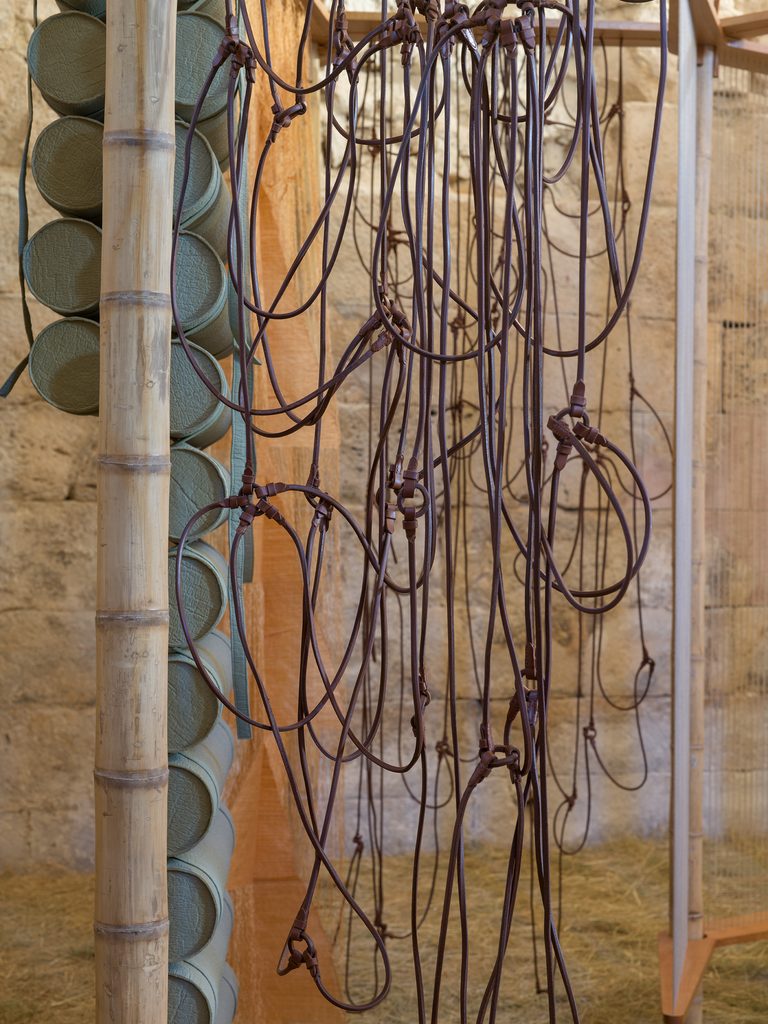
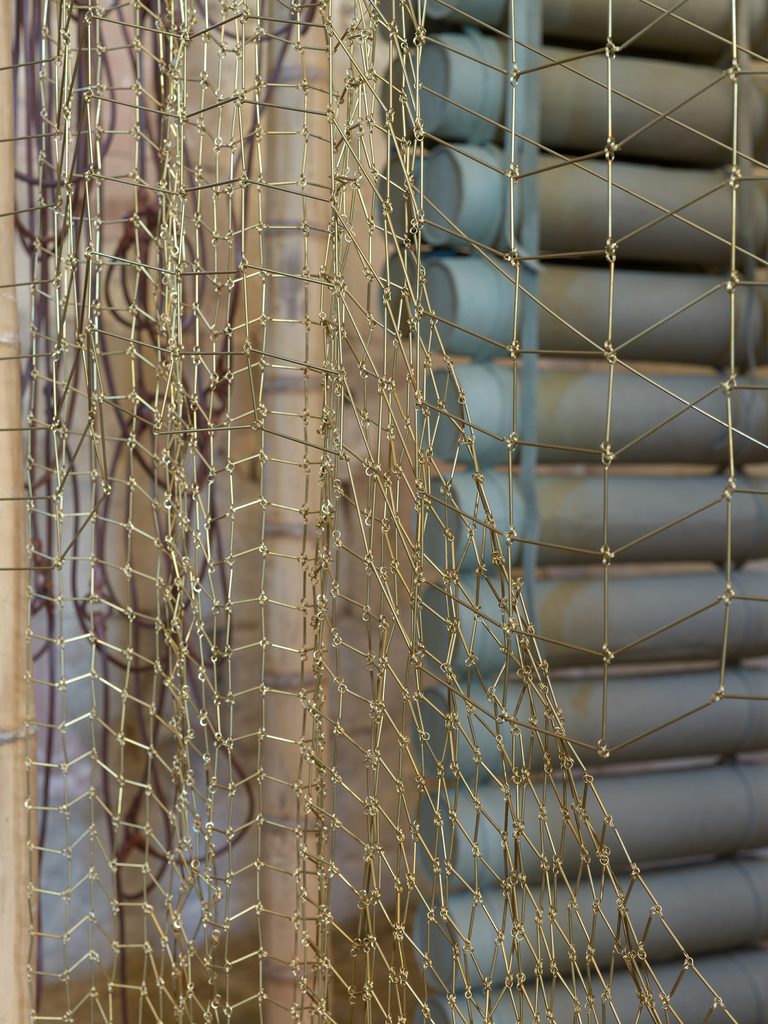
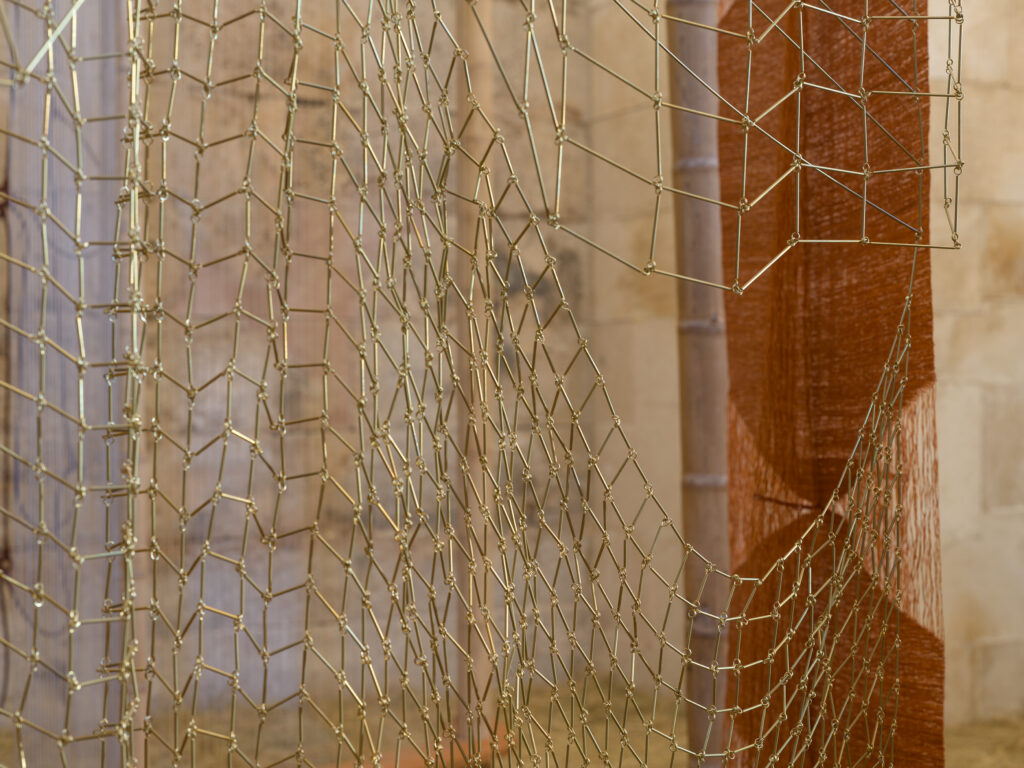
It is especially significant that this relationship between body and space is mediated through materials shaped, in large part, by hand. These materials register rhythm, repetition, the trace of manual labour, and the deliberateness of process, qualities that situate the work in proximity to applied arts, a field historically associated with the female subject and frequently inflected by a condescending valuation. A distinctly ethnographic, indeed anthropological aura runs through the artist’s procedure, as Antunes treats the handmade object as knowledge, skill, and inherited practice, occasionally in terms that recall a pre-industrial, archaic understanding of craft at its most elemental. Her measuring of space thereby exceeds the rationalisation of a given environment, becoming instead a calibration of relations, an inscription of the body into space and of space into the body.
Ultimately, the homemaker and her domain II may be read as a work concerned with measure, the social constitution of space, and the overlooked passages of history. The sculptural quality of the installation derives from its capacity to render spatial relations visible, palpable, and historically laden. Measure appears here as relation, as a mode of attention, and as a tactile archaeology of everyday life, through which the home, manual labour, and the gendered allocation of space are re-examined in their material and symbolic density.
—
(from the text by Dalibor Prančević)
Leonor Antunes was born in 1972 in Lisbon. She lives and works in Berlin. Antunes’ practice provides a unique contemplation on modern art, architecture and design through a reinterpretation of sculpture in a given space. Inspired by important figures in the realm of creation in the 20th century, and often influenced by female protagonists, her work begins by measuring features of architecture and design that interest her. She then uses these measurements as units which can be translated into sculpture. Embracing traditional craftsmanship from around the world, she employs materials such as rope, leather, cork, wood, brass, and rubber to create unusual forms.
Recent solo exhibitions have been shown at the University Gallery of the Angewandte, Vienna (2026), kurimanzutto project space, Mexico City (2026); Foundation VDL, Richard Neutra Residence, Los Angeles (2025); Marian Goodman Gallery, Los Angeles (2025); CRAC, Centre regional d’art contemporain Occitanie, Sète, (2025); CAM Gulbenkian, Lisbon (2024); Fruitmarket Gallery, Edinburgh (2023); Serralves Foundation, Braga, Portugal (2022); MUDAM, Luxembourg (2020); The Box, Plymouth (2020), MASP, São Paulo Museum of Art, Brazil (2019); Haus Konstruktiv, Zurich (2019); Museo Tamayo, Mexico City, Mexico (2018); Hangar Bicocca, Milan, Italy (2018); Whitechapel Gallery, London (2017); San Francisco Museum of Modern Art, California (2016); CAPC Bordeaux, France (2015); New Museum, New York (2015); Kunsthalle Basel, Switzerland (2013); and the Museo Reina Sofia, Madrid, Spain, (2011). Antunes represented the Portuguese Pavilion at the Venice Biennale, Italy in 2019 and has participated in the 58th and 57th Venice Biennale (2019 and 2017); the 12th Sharjah Biennial, UAE (2015); and the 8th Berlin Biennale (2014).
The exhibition is organized with the support of the Ministry of Culture and Media of the Republic of Croatia, Split-Dalmatia County, the City of Split, the Split Tourist Board, the Embassy of Portugal in Croatia and Camões I.P.