
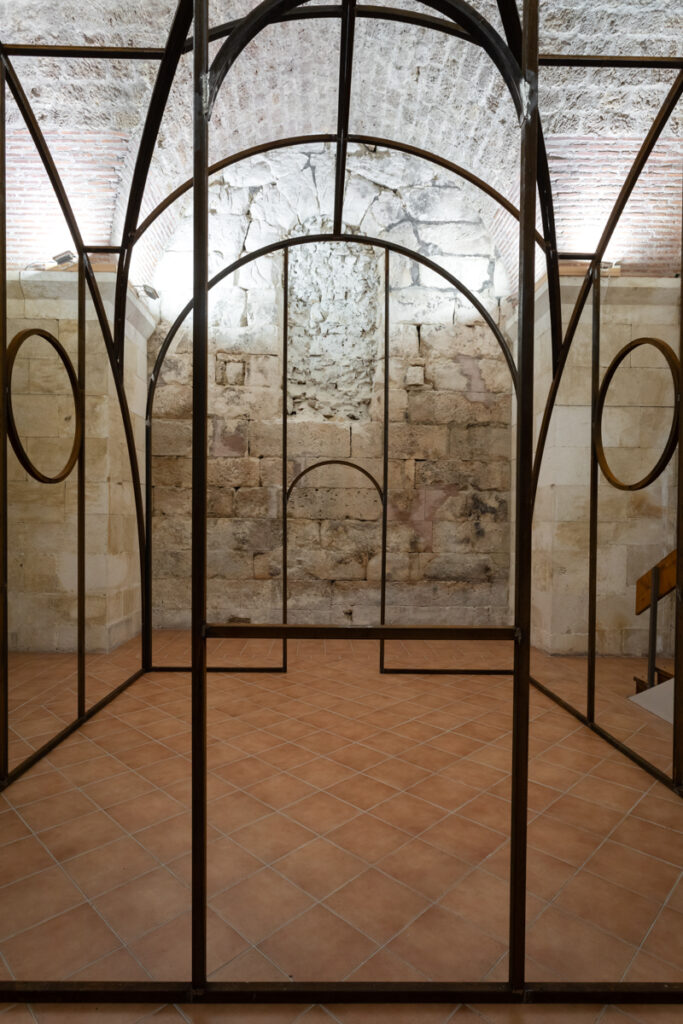
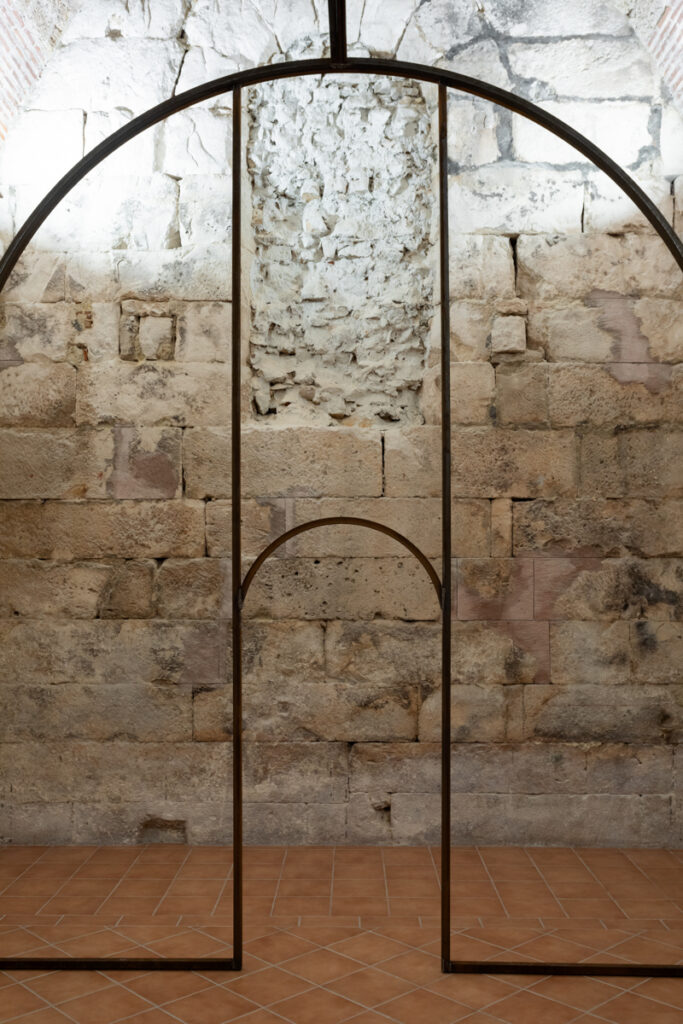
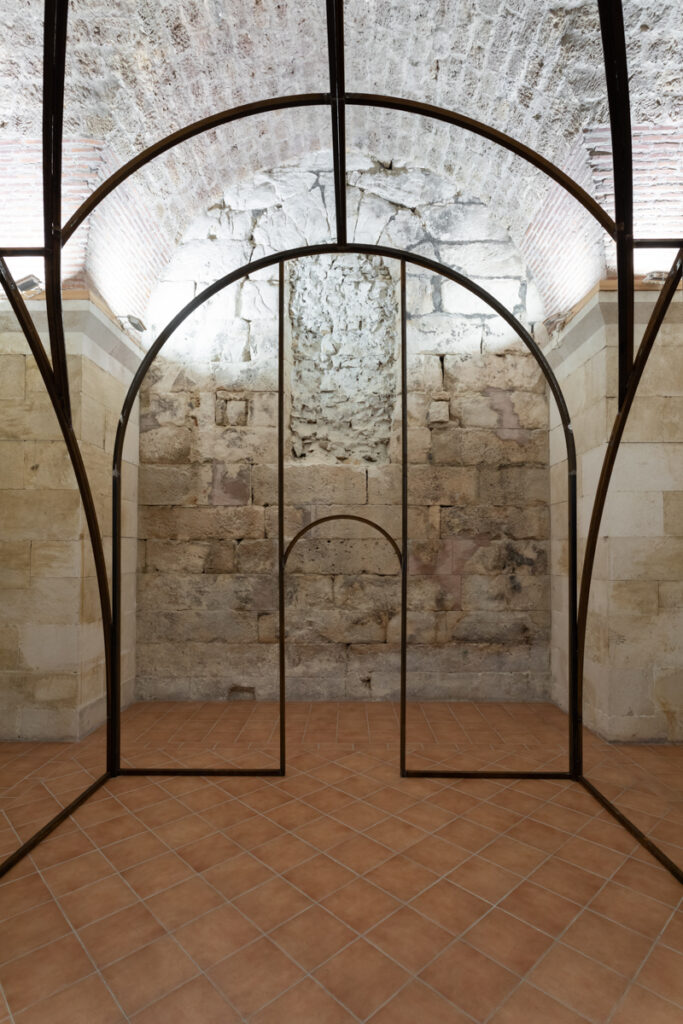
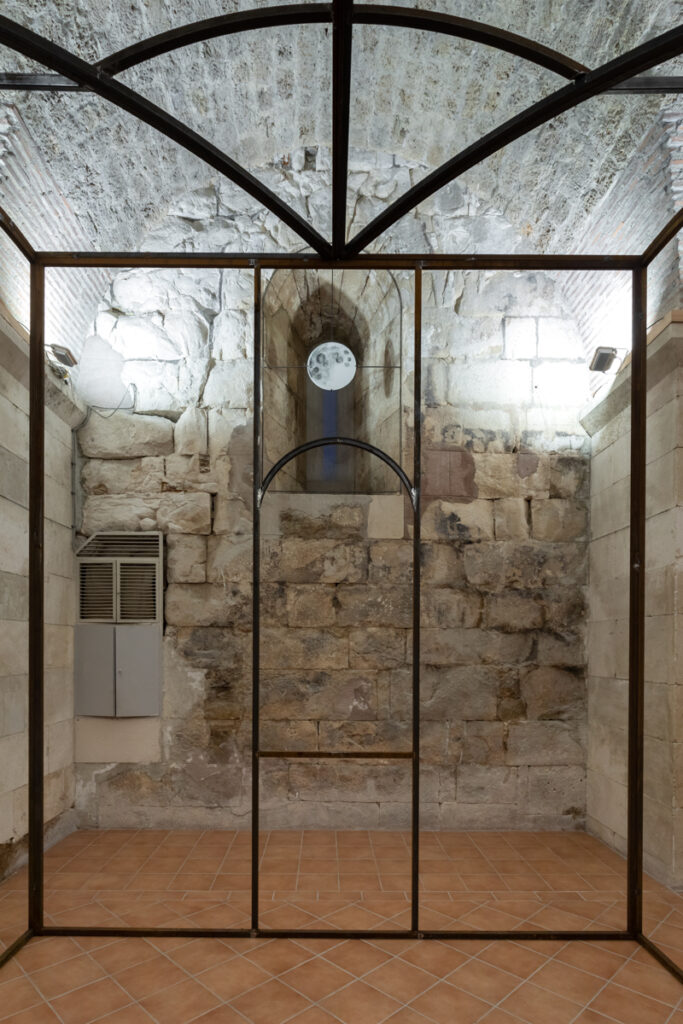
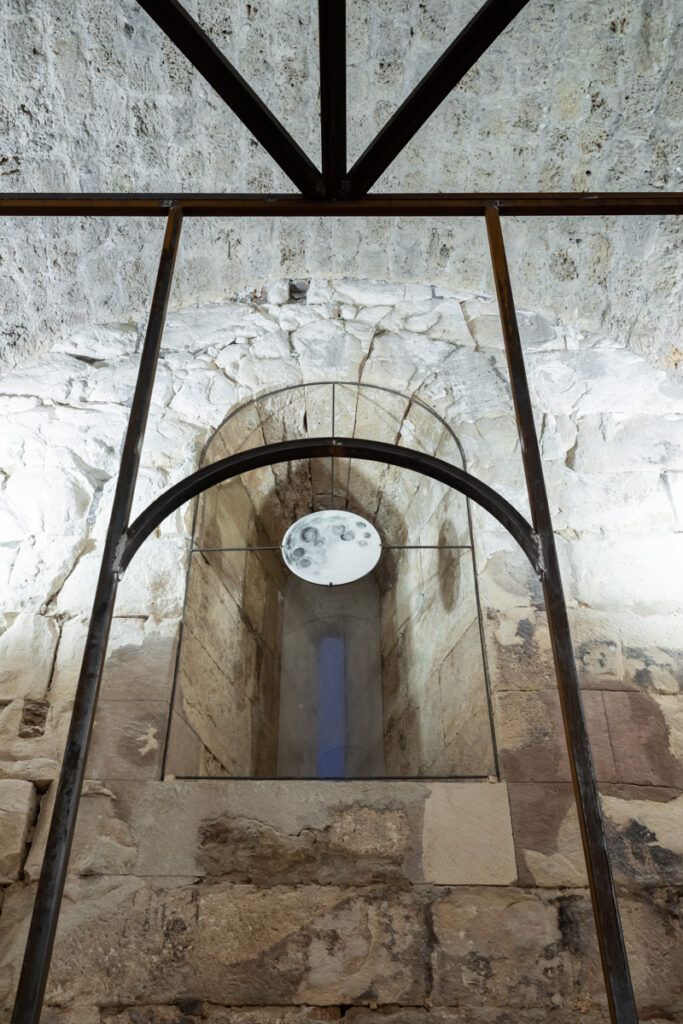
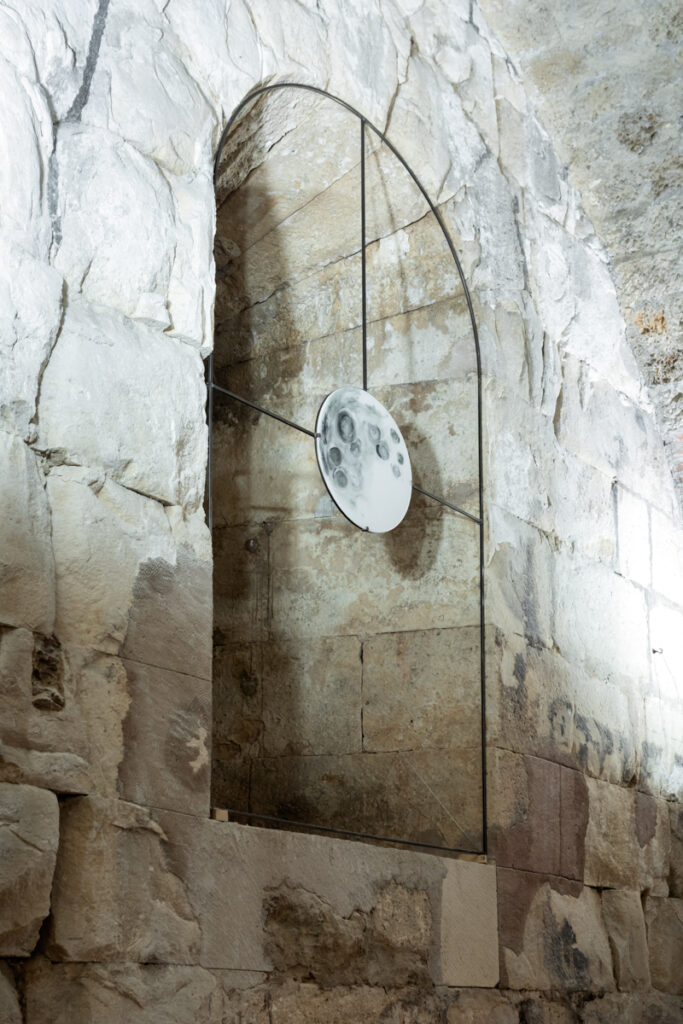
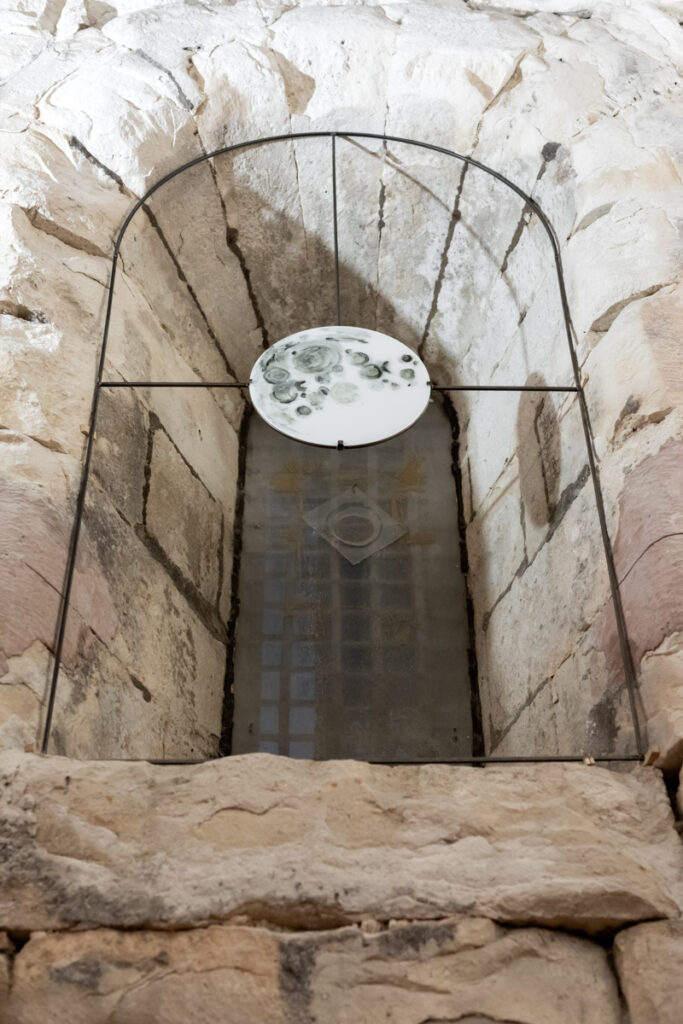
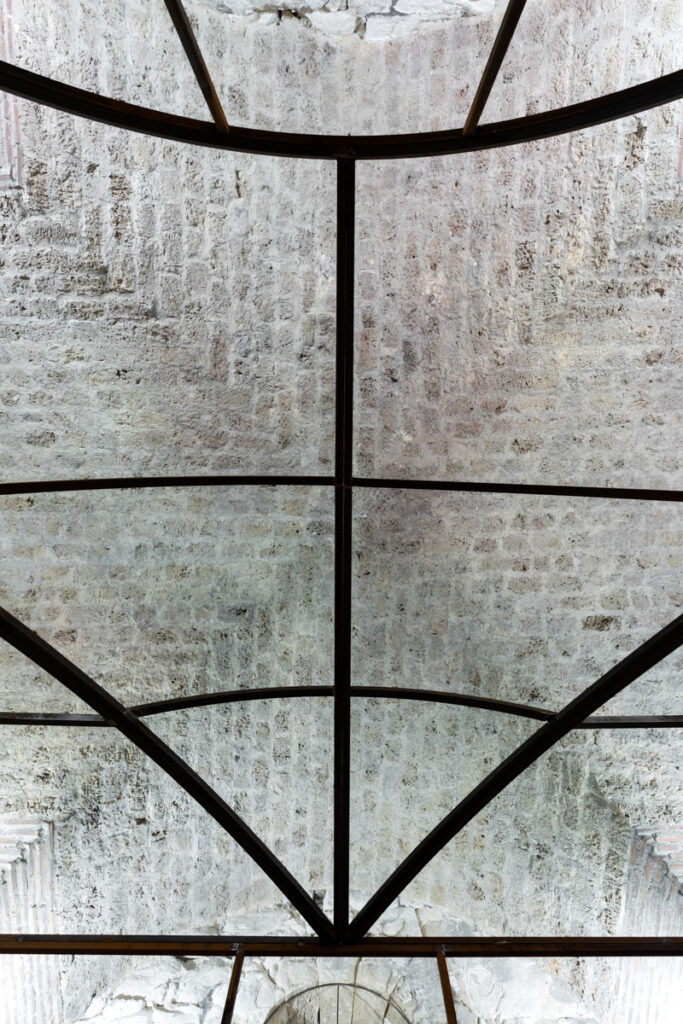
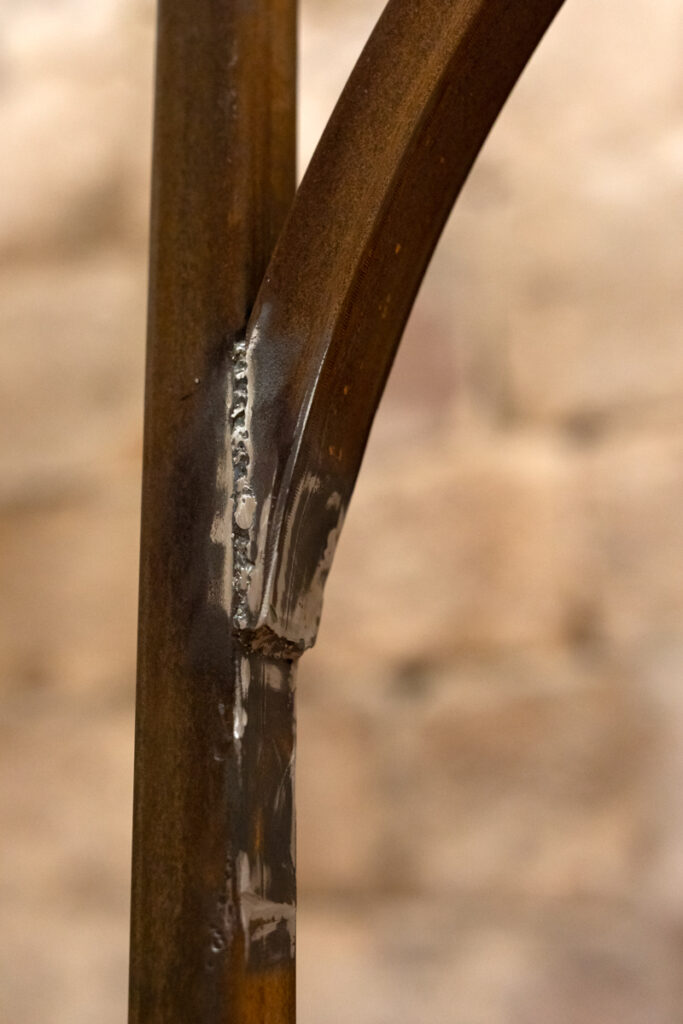
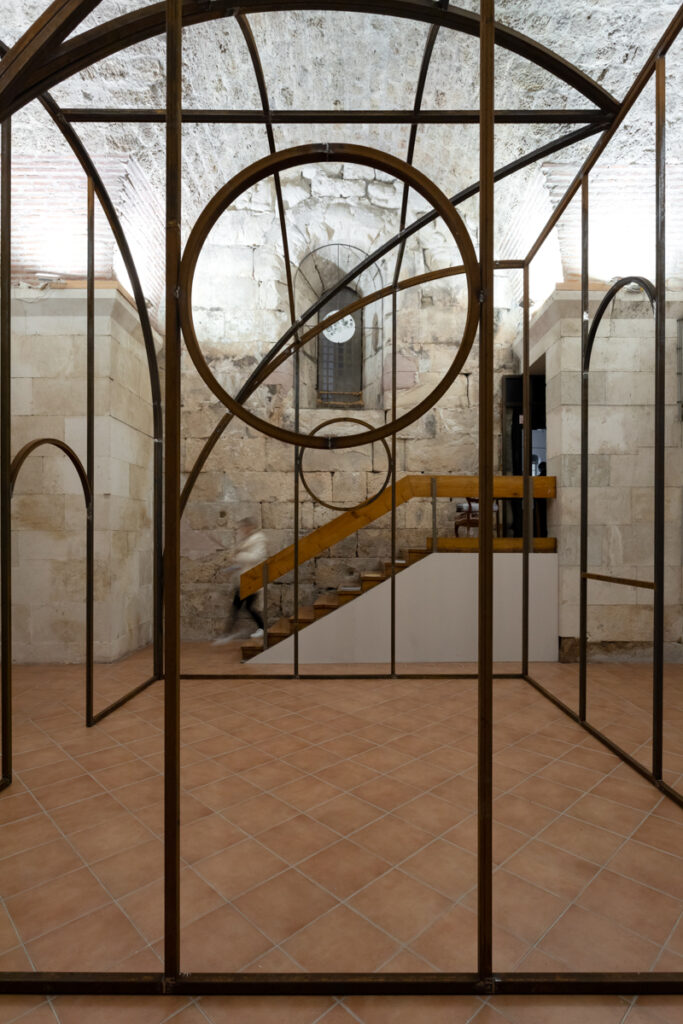
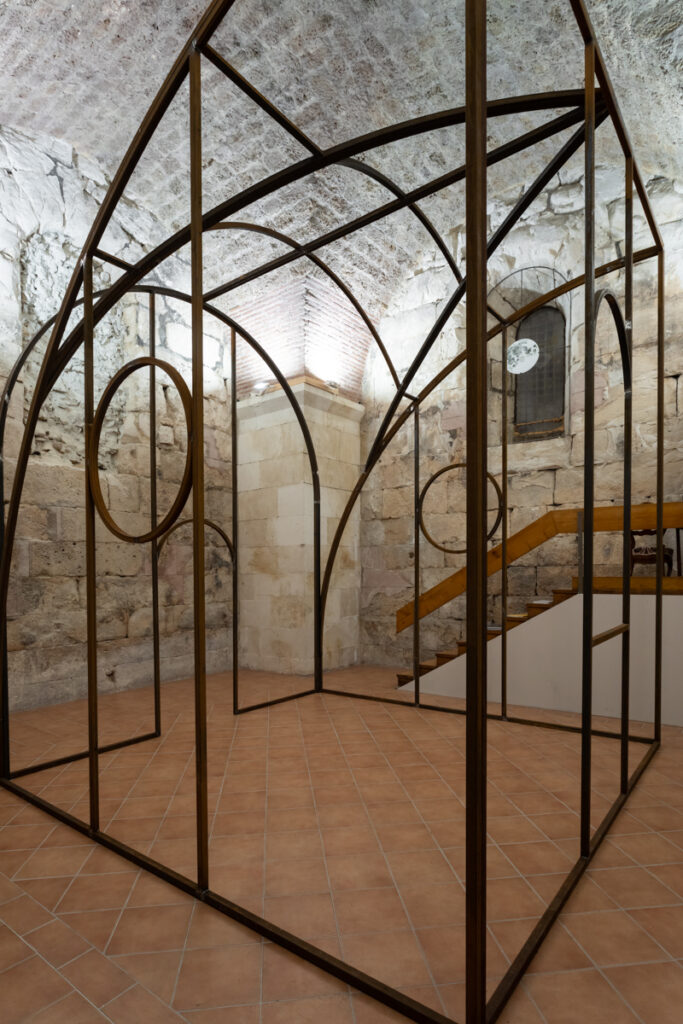
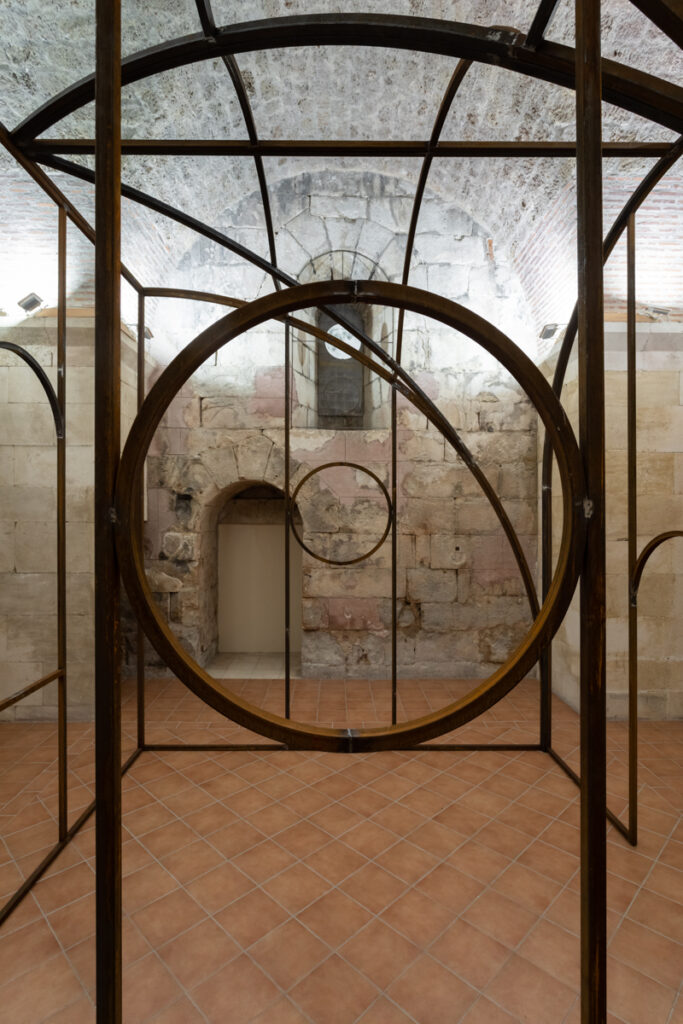
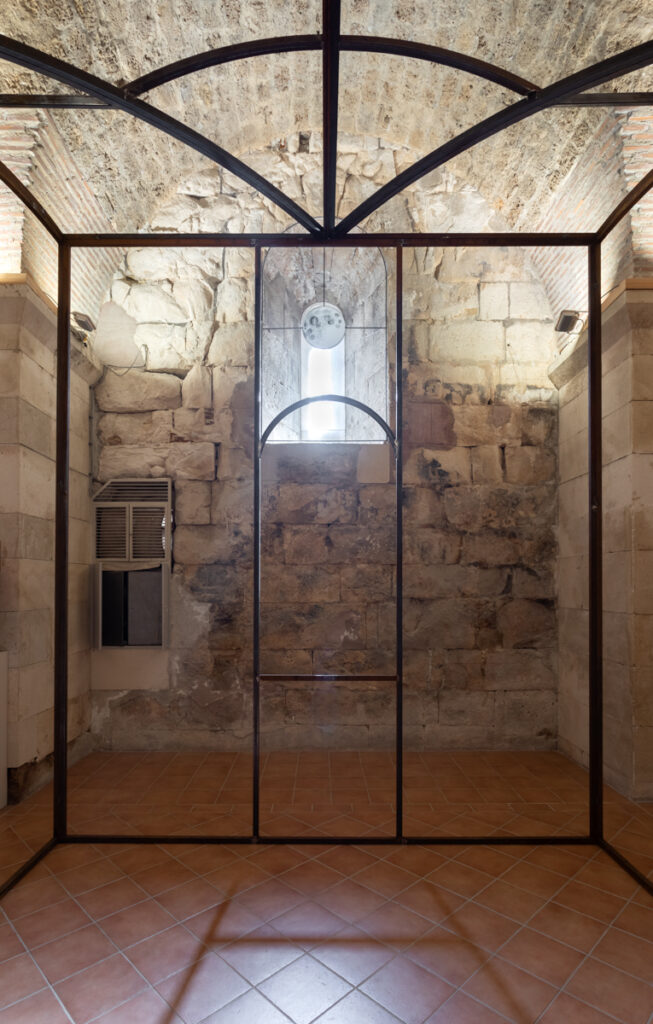
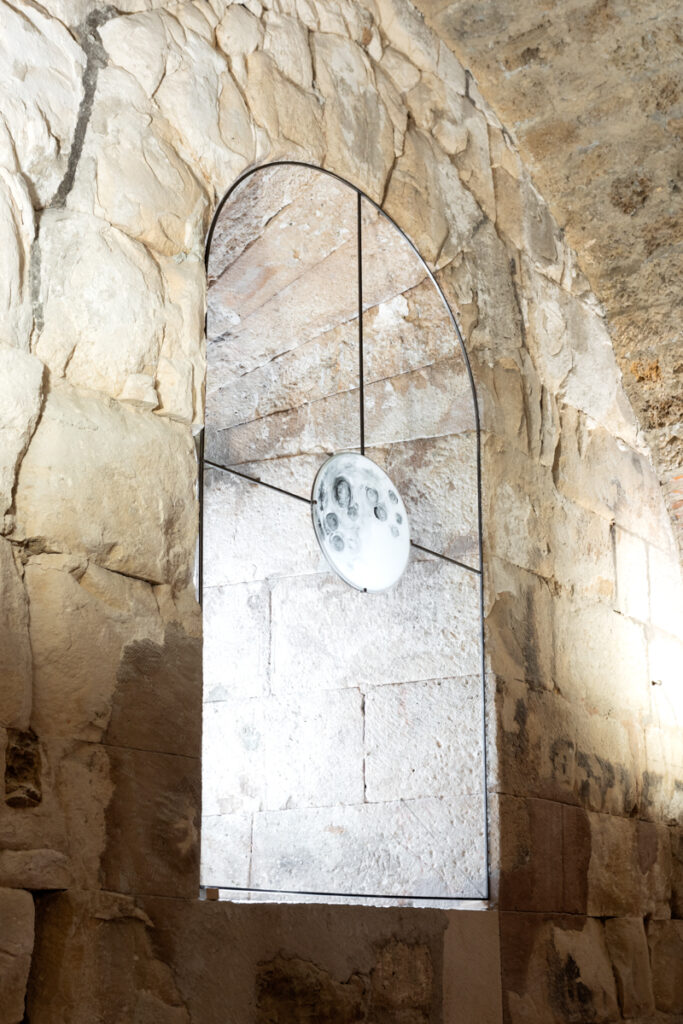
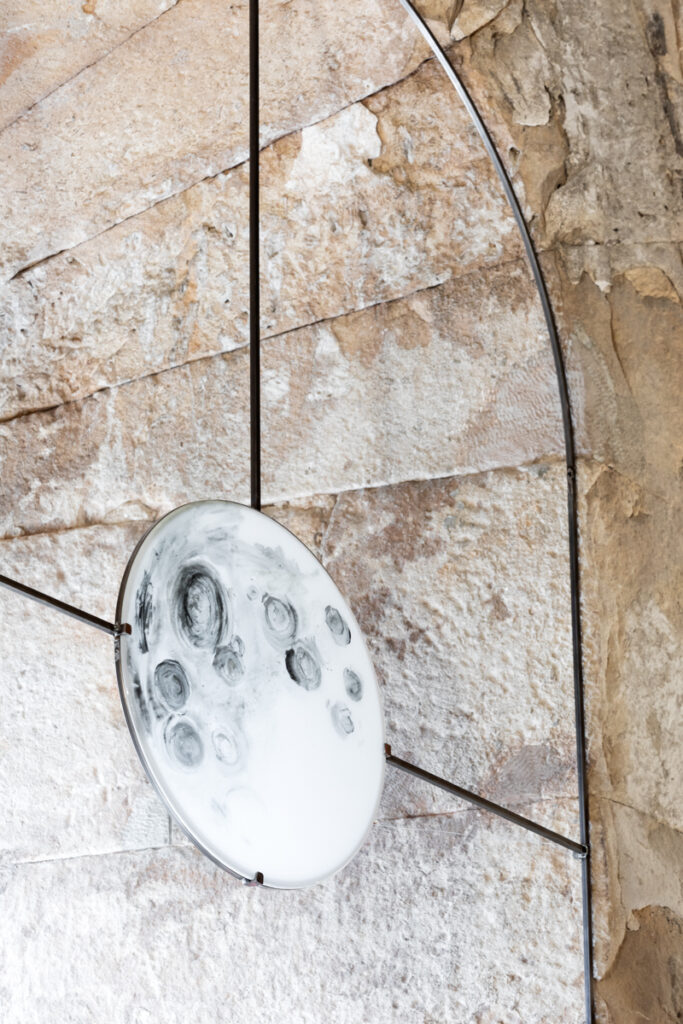
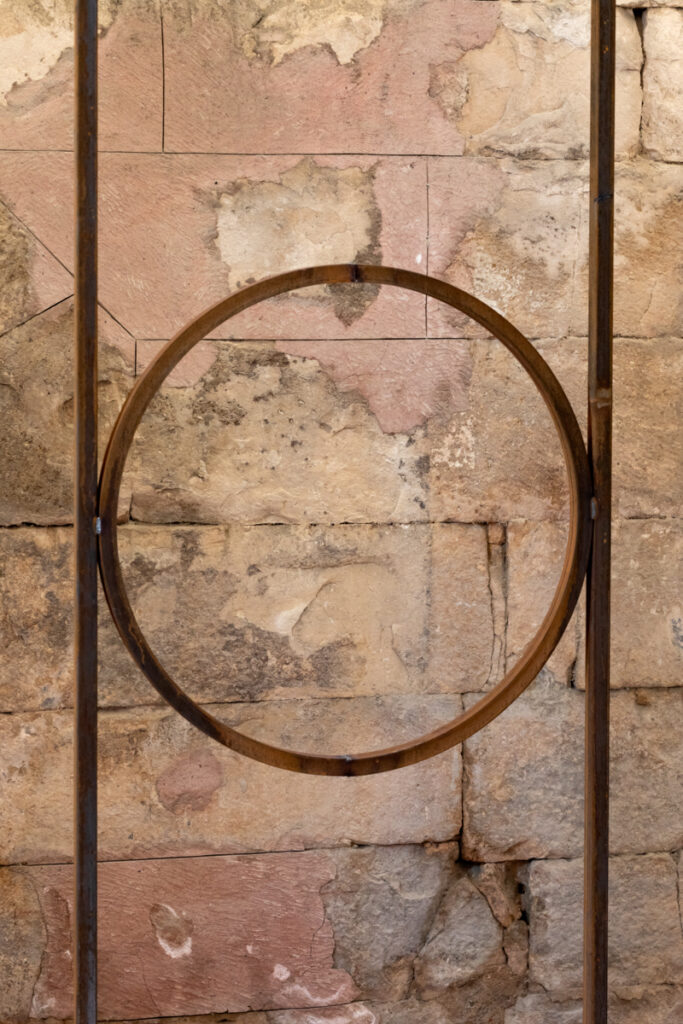
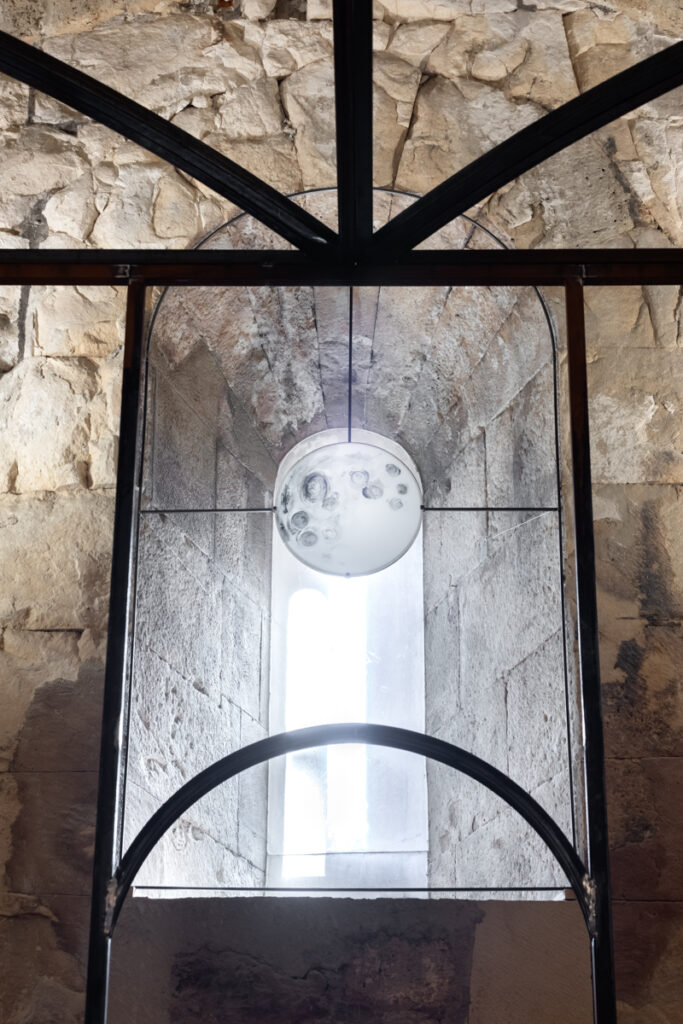
On this occasion, Kula Gallery presents a work by Oscar Tuazon, a structure that can be described equally as sculpture and as architecture, though this duality is far more than a formal conceit. What we encounter is a structure poised between the load-bearing and the fragile, between shelter and gesture, between the space we inhabit and the space that, in turn, shapes us. Within the stone body of the Kula (Eng. tower), whose history already carries connotations of protection and a certain architectural verticality, Tuazon’s intervention operates as a temporary organism, one that does not assert itself as an eternal object. It presents itself as an ongoing process, a construction that implies the potential for addition, disassembly and modification. The meeting of the ephemeral and the transient with the historical continuity of the stone walls produces no excessive tension, nor does it register as an unnecessary intrusion into an already articulated interior. Rather, Tuazon constructs an interior within an interior, a space that reshapes the very concept of the enclosed volume. In doing so, the ephemeral does not rival the enduring but instead animates it from within, making it porous. The historic walls assume the role of a resonant membrane for a contemporary act of construction, while the work calls forth an archetypal impulse towards shelter.
Tuazon frequently employs raw, almost elemental materials – timber, steel and concrete – allowing joints, structural tensions and mass to remain exposed. This constructive austerity heightens our awareness of the interiority being enacted. As visitors step inside the structure or move around it, they become acutely conscious of their own physical presence, measuring themselves against the proportions of the work. The sense of security that architecture conventionally conveys is here rendered ambiguous – both granted and subtly destabilised. In this respect, the work introduces a dimension of mutability and processuality. It manifests both as a physical potential for transformation and a shift in perception that occurs through the observer’s interaction with the space. The structure functions like a mental lens, guiding the way we perceive the environment. Seen as architecture, it challenges the very concept of home; seen as sculpture, it resists mere contemplation and instead invites lived experience. This perceptual destabilisation expands our understanding of space as a social and historical construct, rather than functioning solely as a formal strategy.
Tuazon’s engagement with the cultures of the Indigenous peoples of the Pacific Northwest, particularly the Salish, is woven into the artist’s mental and spatial horizon. Raised and shaped in this region, he absorbed a context in which the connections between space, community and construction are firmly rooted in local cultural practices. This influence is not expressed as quotation or illustration, but as an ethical and spatial sensibility, a vision of space as a common good, of building as a collective act, and of shelter as a site where humans and nature come together. In this sense, Tuazon’s architecture also serves as a gesture of remembrance, a reminder that building was once inseparable from community, territory and the natural environment. In the Kula Gallery, this aspect is felt with particular clarity. The historic structure, originally built for defence and surveillance, encounters a work that suggest openness and dialogue. Here, monumentality stems from the weight of meaning rather than physical scale. Small scale thus becomes a site for profound reflection: on interior and exterior, security and vulnerability, permanence and transience. As a result, Tuazon’s construction is not merely an object occupying space; it becomes a space in the very act of coming into being.
(from the foreword by Dalibor Prančević)
Oscar Tuazon is an artist based in Los Angeles. He is currently Director of Cedar Spring Water School in the Great Basin region of Nevada, a long-term Land Back initiative in collaboration with the Goshute Tribe. Tuazon studied at The Cooper Union and the Whitney Museum Independent Study Program, New York. He is a co-founder of Center for Urban Pedagogy (CUP), New York in 2000; castillo/corrales, Paris in 2007; and Los Angeles Water School (LAWS), Los Angeles in 2016. His work has been included in the São Paulo Bienal, Chicago Architectural Biennial, Whitney Biennial, Venice Biennale and Skulptur Münster.
Solo exhibitions include the Hammer Museum, Los Angeles; Le Consortium, Dijon; Ludwig Museum, Cologne; Bergen Kunsthall, Norway; Kunsthalle Bielefeld, Germany; and Kunst Museum Winterthur, Switzerland.In 2025 Tuazon completed a major public artwork for the City of Seattle.